
Subsea Cable Resilience Is Now a Data-Centre Siting Constraint
A data-centre route is not resilient because it lists two carriers. Physical diversity, landing facilities, repairability and regulation now belong in site underwriting.
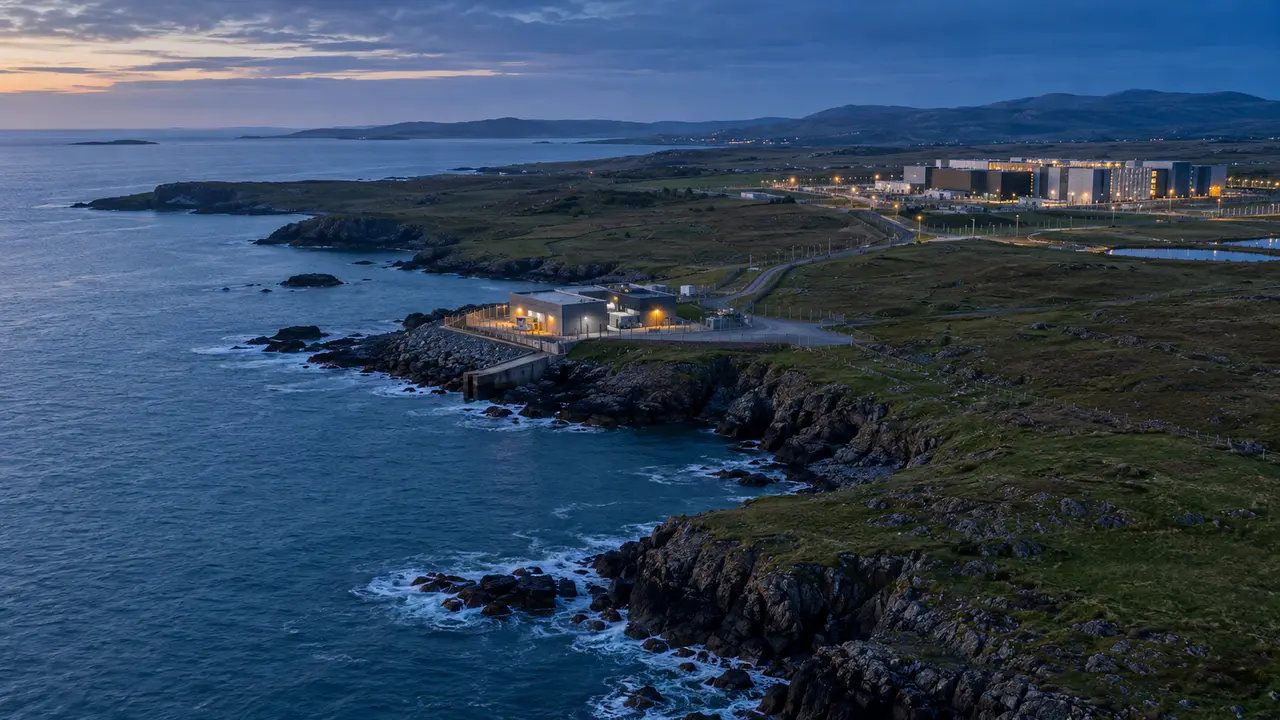
I think the data-centre industry is still underpricing one part of digital infrastructure: the path between a campus and the rest of the network.
A site can have secured land, a credible grid plan and a customer pipeline, yet remain exposed if its supposedly diverse routes converge on the same landing station, repair corridor or regulatory bottleneck. The problem is not that subsea cables are fragile in the abstract. The problem is that geographic redundancy can disappear when physical, operational and legal dependencies are examined together.
That distinction matters for investors, developers and customers because network resilience now reaches beyond telecom engineering. It can influence site selection, service commitments, insurance, repair time and the confidence attached to a delivery schedule.
Two developments this week make the issue unusually concrete. The UK has proposed enforceable security and resilience duties for subsea infrastructure. Separately, Iranian officials described contingency plans to target Gulf undersea cables if conflict resumes. One is a formal policy proposal; the other is a reported threat, not an incident. Taken together, they show why cable resilience should be assessed as an operating constraint rather than left as a line in a generic risk register.
The UK proposal changes the diligence perimeter
On 22 October 2026, the UK government published a White Paper on critical undersea infrastructure. The consultation remains open until 14 January 2027, so the measures are proposals, not enacted law.
The proposed framework would cover subsea telecoms cables, electricity interconnectors and pipelines. It would create offences for physical and non-physical interference, including cyber activity and some preparatory conduct. The maximum proposed penalties are 14 years for intentional conduct, 10 years for reckless conduct and two years for gross negligence, alongside unlimited fines.
For telecoms providers serving the UK, the more important operational change is the proposed duty to identify and mitigate risks, respond to compromises, notify government and the regulator, and inform directly affected users of significant risks. The government also proposes a national-security direction power that could compel providers and repair services to take or refrain from specified actions during a serious incident.
That is a material shift in responsibility. A cable route is no longer only a connectivity asset. It becomes part of a documented resilience system with duties, escalation paths, repair dependencies and potentially significant penalties. The proposed regulator could impose up to £10 million or 10% of qualifying worldwide revenue for non-compliance with security and resilience duties.
The final scope, regulator, territorial reach and implementation timetable remain unresolved. But a developer underwriting a UK-connected campus should not wait for every detail before mapping its exposure.
A threat is not an outage, but it changes the scenario set
On 23 October, Reuters reported that Iranian officials had described plans to target Gulf undersea cables if the United States and Israel attacked Iran again. The report did not establish that an attack had occurred or that a specific cable had been selected.
That distinction must be preserved. Repeating a contingency statement as if it were a service disruption would be analytically wrong.
The useful signal is different: repair denial and prolonged access constraints are part of the stated scenario. That affects the duration of a disruption, not just its initial probability. A cable fault that can be surveyed and repaired promptly is a different risk from one occurring in contested waters, with restricted vessel access, higher insurance costs or deliberate interference with repairs.
The UK Parliament’s 2025 report on subsea telecommunications resilience made a related point. Landing stations and terrestrial backhaul create onshore concentrations even when the subsea map appears diversified. High-capacity systems can therefore reduce the number of physical assets while increasing the consequence attached to each one.
PowerlandMap’s earlier analysis of petabit cables and data-centre geography focused on how higher-capacity routes reshape location economics. The resilience corollary is that capacity concentration must be accompanied by a clearer view of failure domains.
My five-layer corridor test
I would not score cable resilience by counting route names. I would assess five layers and require evidence at each one.
1. Physical route diversity
Two commercial services are not physically independent if they share the same marine corridor, beach manhole, duct bank or terrestrial bridge. The evidence should identify the actual route separation and the points at which paths converge.
A network diagram is useful, but coordinates, landing-station records, carrier documentation and construction evidence are stronger. Unknown segments should remain unknown rather than being converted into assumed diversity.
2. Landing and backhaul diversity
The landing station is often treated as a label on a map. It is an operating site with power, cooling, security, access and terrestrial dependencies.
The diligence question is whether two routes land at different facilities and continue through different backhaul corridors. If they converge at the same metro hub, the claimed redundancy may protect against a marine fault while leaving the campus exposed to an onshore event.
This is the same reasoning PowerlandMap applies to data-centre capacity confidence: a headline number or category is not enough without the evidence boundary behind it.
3. Repairability
Repair time depends on more than spare cable and a vessel contract. It includes fault localisation, permits, weather, port availability, crew readiness, insurance, territorial access and the ability to protect the repair operation.
For each critical corridor, I would record the nearest credible repair base, contractual repair priority, typical mobilisation assumptions and any access constraint that could extend the outage. These inputs should be dated because vessel coverage and geopolitical conditions change.
4. Regulatory and incident readiness
The UK proposal is a useful template even outside the UK. Who must be notified? Who can direct restoration priorities? Which party owns the evidence needed to attribute damage? Can the operator inform affected customers without compromising security?
These are operational questions, not merely legal drafting points. A campus relying on a provider with a tested incident plan is in a different position from one whose resilience case ends at a service-level agreement.
5. Workload consequence
Not every workload has the same tolerance for network degradation. Batch processing, model training, inference, financial transactions and control systems have different latency, data-transfer and recovery requirements.
The campus assessment should therefore link each corridor to the workloads it protects, the available terrestrial alternatives and the time needed to move traffic or compute. This is where network evidence becomes a commercial decision.
The approach complements PowerlandMap’s distributed AI resilience framework. Distribution only improves resilience when the dependencies of the distributed sites are themselves different.
A simple duration sensitivity
Consider a hypothetical campus with 25 MW of commercially critical IT load. Assume 70% utilisation and a gross contribution input of EUR 75,000 per delivered MW-month. These are illustrative assumptions, not market benchmarks or a valuation of any named project.
If a route design and repair arrangement contain an outage to two days, while a concentrated design could extend the same scenario to fourteen days, the incremental twelve-day exposure is:
25 MW × 70% × EUR 75,000 × 12/30 = EUR 525,000
That figure excludes customer penalties, data-replication costs, workload migration, reputational damage, insurance deductibles and any effect on future sales. It also assumes the workload contribution is lost rather than shifted elsewhere.
The point is not that every cable incident costs EUR 525,000. The point is that repair duration can be translated into the same sensitivity model used for power delay and construction risk. A route-diversity decision that reduces the credible outage window may justify additional recurring network cost even when the probability of the event is uncertain.
A more complete model should vary four inputs:
- critical IT load rather than campus ceiling
- utilisable alternative capacity
- contribution per delivered MW-month
- disruption duration under normal and constrained repair conditions
This keeps the calculation reproducible and prevents a dramatic scenario from becoming a false precision.
Comparables need a common definition
Cable-resilience comparisons often fail because the same words describe different perimeters.
“Two carriers” can mean two contracts over one physical system. “Two routes” can mean different marine paths that share one landing station. “Automatic failover” can mean routing capability without enough alternative capacity for the affected workload. “Repair coverage” can mean a regional agreement without a guaranteed restoration time.
A useful comparable should therefore preserve at least:
- number of physically separate marine corridors
- number of independent landing facilities
- terrestrial backhaul convergence points
- tested alternative capacity
- repair priority and mobilisation evidence
- jurisdiction and permit dependencies
- workload recovery objective
- source date and confidence
This is why a simple green, amber or red label is insufficient. The database should show which part of the resilience claim is proven and which remains asserted.
The counterargument: the internet routes around damage
There is a reasonable counterargument. Global networks are designed to reroute traffic, major cloud operators buy capacity across many systems, and a single cable fault rarely isolates an entire market. Some highly publicised threats may never become operational events.
All of that is true.
The mistake would be to move from “the network has redundancy” to “this campus has no material corridor risk.” Global redundancy does not prove that a particular site has enough contracted alternative capacity, physical separation or acceptable latency during a regional disruption. Nor does it prove that repairs can proceed normally in a security incident.
The right conclusion is narrower. Cable risk should not be exaggerated, but route diversity should be evidenced at the level where customers and capital are exposed.
The decision for site selection and underwriting
For developers, I would add a cable-corridor evidence pack to the site data room before major customer commitments. It should include physical paths, landing and backhaul dependencies, repair arrangements, incident contacts and the workloads protected by each route.
For investors and lenders, I would place network-concentration findings beside grid, water and planning risks. The relevant question is not whether an outage is imaginable. It is whether the capital structure and customer contracts can absorb the credible duration.
For customers, I would test failover with the capacity and latency expected during a real constraint, not only confirm that a secondary route exists.
For market intelligence, the task is to keep route, landing, repair and legal evidence separate. PowerlandMap’s project status change log shows why dated evidence matters: infrastructure risk changes as permits, contracts and operating conditions change.
My conclusion is straightforward. Subsea cable resilience is now a data-centre siting constraint because service continuity depends on geography, repairability and regulation at the same time.
A campus is not resilient because its brochure lists two carriers. It is resilient when the physical routes, landing facilities, restoration plan and workload alternatives survive the same scenario without relying on the same hidden dependency.
That is the standard I would use before increasing delivery confidence, and it is the kind of evidence PowerlandMap is built to organise across data-centre intelligence.
The data behind the analysis
Follow Infrastructure with sourced, dated evidence
Qualified supply, anonymised demand and evidence-based matching sit behind each read — with the source, confidence level and verification date on every record
Related analysis
Community Consent Is Becoming Data Center Infrastructure
Power, land and capital are not enough. Community consent now affects grid costs, water design, delivery dates and financing risk.
PowerlandMap and Eagle Alpha: Infrastructure Intelligence for Data Buyers
PowerlandMap welcomes Eagle Alpha to its distribution network, connecting data centre and AI infrastructure intelligence with institutional data buyers and investment funds.
Why AI Data Center Capacity Needs a Confidence Score
A practical confidence score separates AI data-centre IT capacity, facility power, project maturity and annual energy before those figures enter a decision.