
What Makes a Data Center Site Power-Ready in 2026?
A data center site is only power-ready when connection status, capacity, timing, infrastructure scope and delivery evidence align. Here is a practical framework.
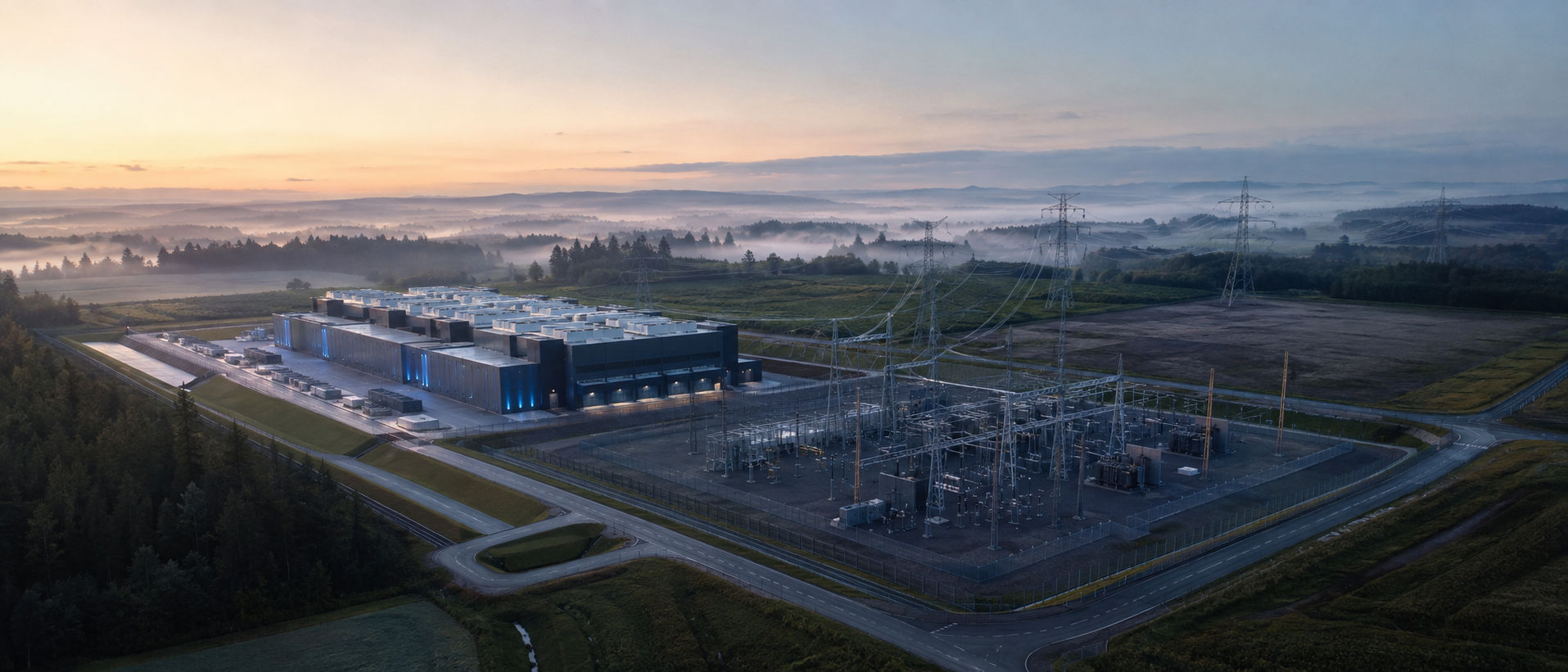
A power-ready data center site is not simply a parcel of land located near a substation. It is a site where the route from the electricity network to usable data center capacity is sufficiently documented, controlled and deliverable to support an investment or deployment decision.
This distinction is becoming critical. Two opportunities may both be marketed as “100 MW sites”, while one has an executed connection agreement and a defined reinforcement programme and the other is supported only by an early-stage grid enquiry.
The headline figure may be identical. The underlying risk is not.
In my view, the data center market has spent too long treating power as a binary attribute: either available or unavailable. That approach is no longer adequate. Power readiness is a progression of technical, contractual and delivery evidence, and every project should be described according to where it genuinely sits on that progression.
Why Power Readiness Is Becoming More Important
The International Energy Agency’s Energy and AI report projects that global data center electricity consumption could reach approximately 945 TWh by 2030, more than double its 2024 level. Electricity consumption from accelerated servers, driven mainly by AI adoption, is projected to grow by around 30% annually in the IEA base case.
This demand is not distributed evenly. Data centers concentrate very large electrical loads in a limited number of locations, often within markets whose transmission and distribution infrastructure was planned before the current acceleration in cloud and AI demand.
The result is a growing gap between theoretical electricity demand and capacity that can be delivered at a specific site within a commercially useful timeframe.
Great Britain provides a clear illustration. According to National Energy System Operator connection-reform data, the previous grid connection queue had grown beyond 700 GW. The system was therefore restructured to prioritise viable and sufficiently advanced projects rather than allowing speculative applications to block more credible developments.
In July 2026, Ofgem proposed additional data center connection reforms, including commitment fees and project milestones. Under the proposals, developers could be required to demonstrate a credible end user, the procurement of long-lead electrical equipment and the financial and technical capability to deliver the project.
This is an important shift. A project’s position in a queue is no longer enough to demonstrate value. Evidence of progress, commitment and deliverability is becoming just as important as the number of megawatts requested.
Start With the Exact Connection Point
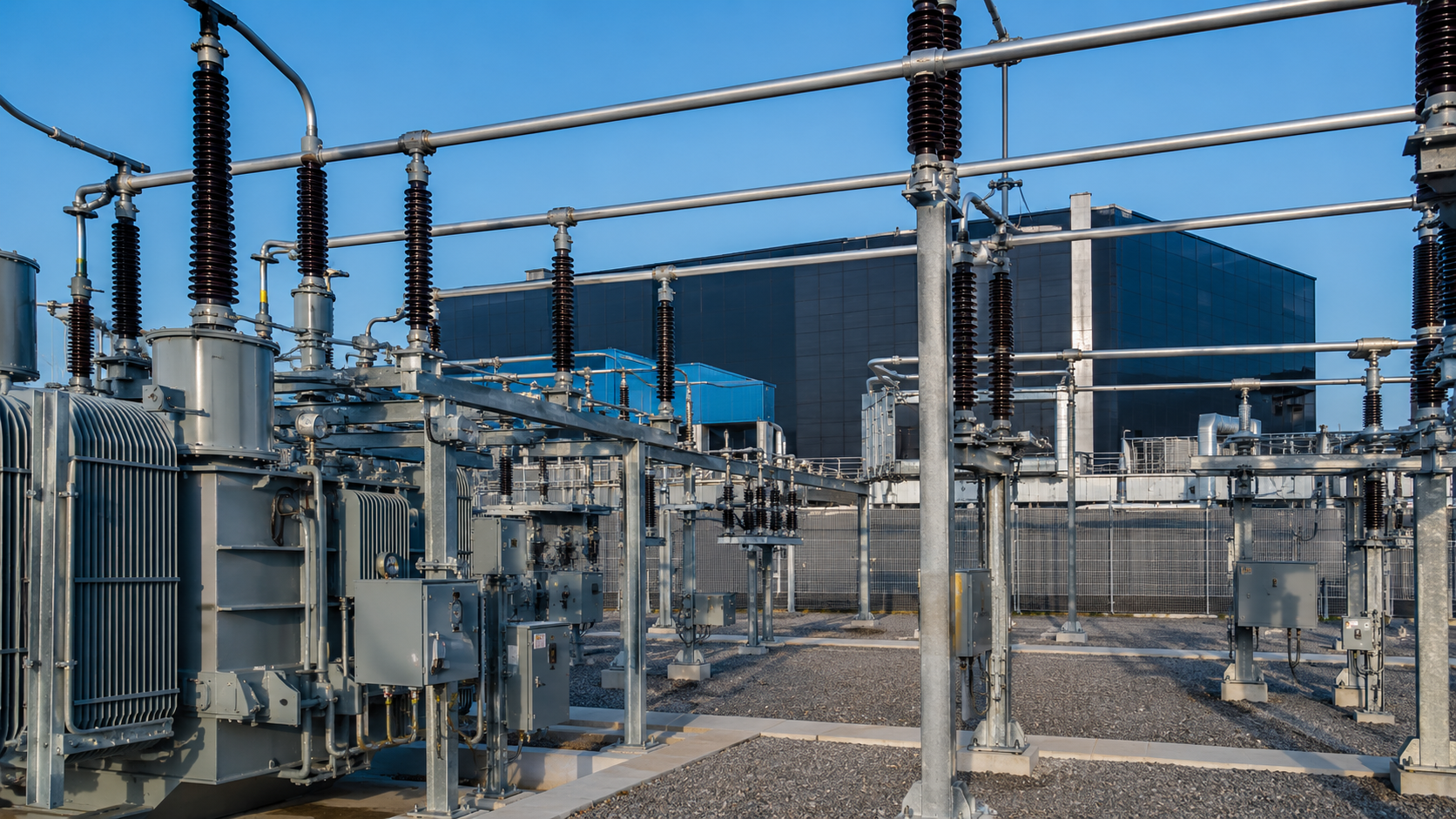
The first question is not whether power infrastructure exists near the site. It is whether the project has an identified and technically relevant connection point.
A credible opportunity should identify the transmission or distribution network operator, the relevant substation, the proposed voltage level, the expected connection configuration and the legal entity that owns or controls the application.
A transmission line visible from the land does not prove that capacity is available. It does not confirm that a new connection can be accommodated, that the route to the site is feasible or that the landowner controls any associated connection rights.
This is why PowerlandMap’s methodology treats proximity to electrical infrastructure as contextual information rather than evidence of secured power. The original network document, its date and its precise contractual meaning remain essential.
Understand What the Connection Status Actually Means
Connection capacity moves through several stages. A project may begin with an enquiry or feasibility study, progress to a connection offer, then reach a reserved or contracted position before reinforcement work and eventual energisation.
These stages cannot be treated as equivalent.
A connection offer may still contain significant conditions, securities, milestones and termination rights. An executed agreement may depend on upstream network works that remain outside the developer’s direct control. Even an energised site may face operating restrictions or a lower usable capacity than the headline figure suggests.
Terminology also varies between jurisdictions. “Reserved”, “allocated”, “contracted” and “available” do not necessarily represent the same legal or technical status in different markets.
The right approach is therefore to preserve the terminology of the original source, identify what evidence supports it and explain what must still happen before the capacity can be used. This distinction is central when comparing opportunities across the markets included in PowerlandMap’s geographic coverage.
Separate Grid Capacity, Facility Power and IT Load
Another frequent source of confusion is the use of a single megawatt figure without defining what it measures.
A disclosed capacity may refer to the maximum grid import, the rating of installed transformers, the facility’s electrical capacity, the capacity reserved under a network agreement, the first phase of a development, the ultimate campus ambition or the IT critical load available to servers.
These numbers are connected, but they are not interchangeable.
For example, a facility with 100 MW of usable electrical capacity and a design PUE of 1.25 would have a theoretical IT load of approximately 80 MW. The calculation is simple: 100 MW divided by 1.25.
However, even this result may need to be adjusted for operating reserves, redundancy, equipment configuration, contractual restrictions and the phasing of the development.
This is why PowerlandMap separates reported capacity from estimated capacity and retains the original definition wherever it can be established. An estimate can be useful, but it should never silently replace a sourced figure.
My view is that this distinction will become increasingly important as AI campuses move towards higher rack densities. A site may have an impressive grid allocation while remaining unable to translate that allocation into the IT configuration, cooling architecture or deployment schedule required by a specific user.
Challenge the Energisation Date
A credible power date should be linked to an actual delivery programme. It should reflect the timing of design, land rights, permits, network reinforcement, substation construction, transformer procurement, protection works, testing and commissioning.
Without those dependencies, a date is closer to an ambition than a forecast.
The assessment must also distinguish between the energisation of the first phase and delivery of the ultimate campus capacity. A site capable of receiving 20 MW in 2028 and expanding to 100 MW in 2031 should not be presented simply as “100 MW available in 2028”.
Phasing is not necessarily a weakness. In many cases, it is the most credible way to align grid delivery, construction and customer demand. The problem arises when different phases are combined into a single headline that hides the actual deployment sequence.
For occupiers, investors and developers using the PowerlandMap product, the useful information is not merely the final capacity. It is the sequence in which that capacity could realistically become usable.
Identify the Reinforcements Behind the Connection
Many projects depend on electrical work beyond the site boundary. This can include a new grid supply point, additional transformers, transmission-line reinforcement, protection-system changes, reactive-power equipment or a new cable corridor.
A serious assessment needs to establish who is responsible for each element, who funds it and whether it depends on third-party land, permits or infrastructure shared with other projects.
A project may hold an advanced contractual position and still face a material delivery risk if an upstream reinforcement has no final programme or depends on works controlled by another party.
In my opinion, this is where some of the largest valuation errors occur. The market often gives considerable value to a connection agreement while paying insufficient attention to the physical programme behind it.
The agreement is important, but the infrastructure still has to be designed, permitted, procured, built and commissioned.
Power Must Align With the Rest of the Site
Grid capacity alone does not create a deployable data center.
Land control, planning status, environmental constraints, cooling strategy, fibre diversity, construction access, geotechnical conditions and backup-power requirements all have to align with the electrical programme.
A permitted site without a deliverable connection is not power-ready. Equally, a strong grid position attached to unsuitable land or an unworkable planning strategy does not create a ready development opportunity.
The relevant completion date is determined by the slowest credible workstream.
This is one reason the PowerlandMap fictional demo presents power, development status and market context together. Assessing these factors in isolation can create a misleading picture of readiness.
Assess the Delivery Organisation as Well as the Asset
The quality of the project team also matters. A credible end user, financial capability, experienced engineering resources and evidence that long-lead equipment is being procured can materially change the probability of delivery.
This does not mean that early-stage developments should be dismissed. Some of the most interesting investment opportunities are identified before every right and approval has been secured.
However, their description and valuation should reflect the evidence available at that point in time.
A transparent early-stage opportunity with a capable team may be more attractive than a supposedly advanced site whose documentation is incomplete or inconsistent.
The strongest project teams are usually willing to explain what is secured, what is still under negotiation and which dependencies sit outside their control.
The Warning Signs I Would Investigate First
When reviewing a data center opportunity, I become cautious when the capacity is described only as “nearby”, when a utility letter is presented without its contractual context or when the same MW number appears to represent grid capacity, facility power and IT load.
I would also challenge any energisation date that is not linked to a reinforcement programme, any ultimate campus figure presented as initial-phase capacity and any claim based entirely on secondary reporting when the primary document should be available.
These issues do not automatically make a site unattractive. They show where the due diligence should begin.
The objective is not to classify projects as simply good or bad. It is to understand which risks have already been resolved, which remain manageable and which could fundamentally affect delivery.
A More Useful Definition of Power-Ready
For practical comparison, I see power readiness as a spectrum.
At the earliest stage, a project may have identified relevant infrastructure and submitted an enquiry, but still lack formal evidence of deliverable capacity. A studied or offered project has progressed further, although important technical or commercial conditions may remain.
A reserved or contracted project should be supported by a more formal agreement, but the precise milestones, securities and reinforcement responsibilities still need to be reviewed. Construction readiness is achieved only when the power programme aligns with the land, permits, design and procurement strategy.
Finally, an energised site has commissioned infrastructure, although its usable capacity and operating restrictions must still be understood.
This vocabulary is not intended to replace the underlying documents. It creates a more consistent basis for comparing sites that might otherwise be marketed using the same language.
PowerlandMap applies this principle by separating public facts, structured observations and clearly identified analytical estimates. You can review the broader Intelligence section for further market analysis.
My View: Evidence Will Outperform Headline Megawatts
The most valuable data center sites will not always be those advertising the largest capacity.
They will be the sites where the relationship between power, land, timing and delivery responsibility can be understood quickly and defended under due diligence.
As grid queues become more selective, a smaller but better-documented connection may be more valuable than a much larger speculative request. Investors and occupiers increasingly need certainty around the first usable megawatts, not simply a vision of the ultimate campus.
This will also affect how projects are financed. Clear evidence reduces the number of assumptions that lenders, investors and end users need to make. It makes development risk easier to price and allows capital to be released against identifiable milestones.
Power readiness should therefore be treated as a continuously updated evidence position, not as a permanent marketing label.
The Bottom Line
A genuinely power-ready data center site connects a documented grid position with a defined capacity, a credible energisation programme, known infrastructure responsibilities, suitable land and a capable delivery organisation.
The essential question is not whether a project can show a large MW number. It is whether that number can be translated into usable capacity at the required location and within the required timeframe.
For teams evaluating expansion markets, powered-land opportunities or infrastructure investments, PowerlandMap provides a structured way to compare what has been announced, what is supported by public evidence and what still needs to be verified.
You can review the available subscription and on-demand options or request access to PowerlandMap to discuss a specific market or site requirement.
Sources
International Energy Agency — Energy and AI: Energy demand from AI, 2025
Ofgem — Proposed data centre connection reforms, 29 July 2026
National Energy System Operator — Connections Reform Results
The data behind the analysis
Follow Power & Grid with sourced, dated evidence
Qualified supply, anonymised demand and evidence-based matching sit behind each read — with the source, confidence level and verification date on every record
Related analysis
When Shoulder Season Disappears
Year-round data-center demand is eroding the grid’s traditional maintenance window. A practical diligence framework for delivery, resilience and expansion risk.
From Grid MW to Live IT Capacity
A six-level evidence framework for separating grid offers, electrical envelopes, designed IT capacity, commissioned supply and live data center load.
A Power Deal Is Not IT Capacity
A practical framework for separating generation, contracted supply, grid connection, facility electrical capacity and critical IT load.