
Reserved Matters: The Milestone Between Planning and Buildable Data Center Supply
Why outline consent, reserved matters, enabling works and construction should never be treated as one category of data center supply — and what recent UK filings reveal about real development progress.
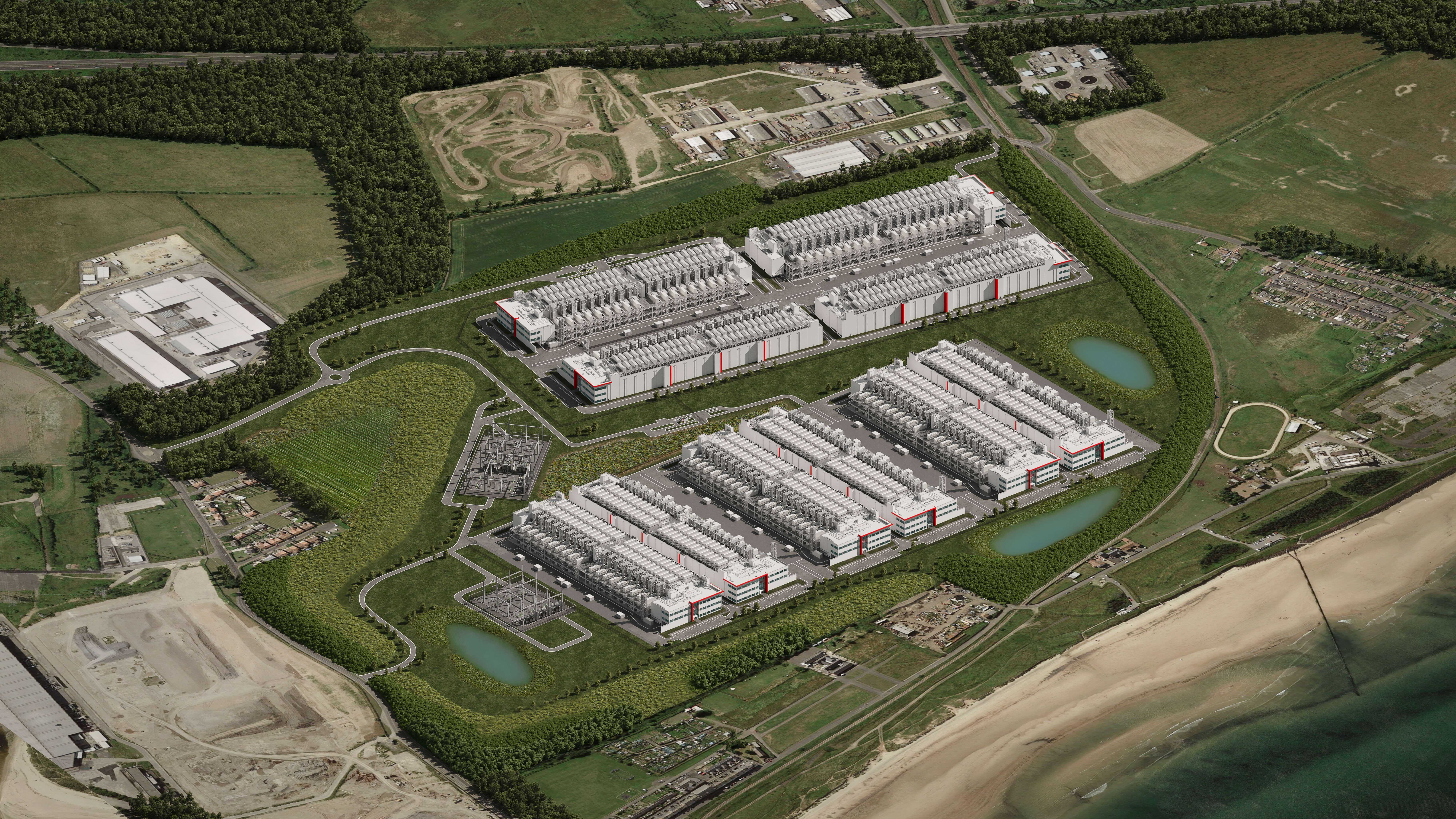
Data center supply is often overstated because projects are grouped together long before they are genuinely buildable. A site with outline planning permission is not the same as a site with detailed approvals, enabling works underway, a construction contract in motion, or commissioned IT capacity. Recent UK filings at QTS Cambois and the Equinix South Mimms campus show why those distinctions matter.
For investors, developers, operators and end users, reserved matters is one of the most useful intermediate milestones to track. It does not mean a data center is operational, or even that vertical construction is certain. But it does mean the project has moved beyond a high-level planning principle into detailed questions of layout, scale, appearance, access, landscaping and infrastructure. In other words, it is a stronger indicator of delivery intent than outline permission alone.
That distinction is central to how PowerlandMap approaches market intelligence, coverage and methodology: supply should be classified by evidence and maturity, not by headline ambition.
Why reserved matters matters
In the UK planning system, large developments can secure outline permission before detailed design is fixed. Outline approval establishes the principle of development and the broad parameters within which the scheme can proceed. The detailed components then follow through reserved matters applications and the discharge of planning conditions.
That sequence is especially important for data centers because the gap between “approved in principle” and “ready to build” can still contain major execution risks: grid interfaces, road access, drainage, utilities, noise, cooling configuration, fuel strategy, biodiversity, construction logistics and the precise phasing of individual buildings.
South Mimms is a good example. The official DC01UK project site states that Hertsmere Borough Council resolved to grant outline planning permission in January 2025, while specific details such as appearance, layout, landscaping and scale were left for later determination. On 1 September 2026, a new reserved matters application covering site-wide advanced infrastructure and enabling works for Phase 1a was recorded. That is a meaningful progression, but it is still not equivalent to completed data center capacity.
The same principle applies at Cambois. QTS says the campus received outline approval and has since been submitting further details to Northumberland County Council. Its own project page describes continuing earthworks through 2026 and a planned start on the first data center building. Separately, application 26/03028/REM covers reserved matters for two Phase 2 data center buildings and associated infrastructure. The filing is substantial — the public planning digest reports 45,167 square metres of gross internal area across two buildings — but no defensible IT MW figure is published in that application.
The five stages that should not be collapsed into one supply number
A useful decision framework is to separate the development pathway into five evidence states.
1. Announced or identified
A developer, landowner or authority has publicly identified a potential project. At this point, the project may have a location and target scale but limited evidence around land control, power, planning or programme. It belongs in the market pipeline, but not in near-term deliverable supply.
2. Outline planning or principle established
The development principle has progressed through planning, but material details remain unresolved. This is a stronger signal because public authorities have engaged with the scheme and broad parameters are becoming defined. It still says relatively little about the timing of physical delivery.
3. Reserved matters and condition discharge
Detailed design, access, landscape, infrastructure and other conditions begin to convert the outline concept into an executable development package. This is where the project starts to become much more informative for investors and tenants because specific phases, buildings and enabling requirements become visible.
4. Enabling works and vertical construction
Site clearance, levelling, roads, substations, drainage and other enabling works reduce delivery uncertainty further. Vertical construction is a stronger milestone again because it demonstrates committed capital and physical progress. Even here, however, a project should not be counted as operational capacity before commissioning and energisation.
5. Commissioned and available capacity
Only when power is energised, systems are commissioned and the relevant IT capacity can actually be occupied should the project contribute to available supply. Contracted capacity and available capacity should also remain separate where evidence allows.
This hierarchy is more useful than a simple “planned / under construction / live” classification when evaluating markets. PowerlandMap’s site and market coverage is intended to make those distinctions visible rather than flattening every project into a single pipeline number.
What Cambois and South Mimms tell us about UK supply
The two projects illustrate a broader market issue: planning progress can be real without translating directly into near-term IT capacity.
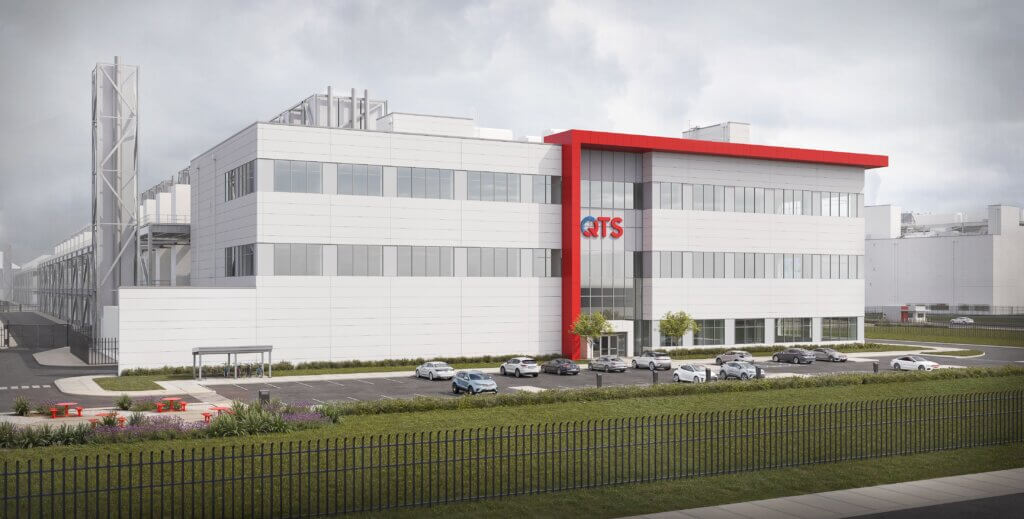
At Cambois, QTS has clear public evidence of outline approval, enabling activity and phased planning submissions. But the latest reserved matters filing does not publish a comparable IT MW figure. Treating the Phase 2 filing as a specific new capacity addition would therefore require an assumption that the public documents do not support.
At South Mimms, the Phase 1a filing is explicitly about advanced infrastructure and enabling works. That is highly relevant because infrastructure work often determines whether later building phases can move efficiently. But again, it should not be presented as newly available capacity. It is a readiness milestone.
This is exactly where market intelligence can become misleading. A headline may say a campus is “approved” or “under development,” while the commercial question is much more specific: what can actually be delivered, when, with what evidence, and what remains conditional?
For tenants, that determines whether a site can meet an RFS requirement. For investors, it determines how much development risk is still embedded in the asset. For developers, it determines which workstreams need to be closed before the next capital commitment.
Power and planning need to be read together
Planning maturity is only one axis. A highly advanced planning position does not solve a weak power pathway, and a strong grid position does not compensate for unresolved permitting or delivery constraints.
That is why a site-readiness assessment should combine at least four questions:
- What planning milestone has actually been achieved?
- What power position is evidenced, and what is its delivery date?
- What physical enabling works remain before construction or energisation?
- Which capacity is announced, contracted, deliverable or operational?
The difference between these states is especially important as developers pursue larger AI-oriented campuses where grid connections, substations and phased utility works can be as critical as the data hall buildings themselves. Our earlier note on what makes a data center site power-ready addresses the power side of this problem in more detail.

A better way to measure future supply
For PowerlandMap, the practical conclusion is simple: future supply should be weighted by maturity, not merely summed by announced capacity.
An outline-approved 500 MW campus and a commissioned 50 MW facility do not provide the same commercial value today. Nor should a reserved matters application be ignored simply because it has not yet reached construction. Each milestone reduces uncertainty, and the market needs a way to preserve that information.
PowerlandMap view: the most useful supply intelligence is not the biggest possible number. It is the clearest evidence chain from land and power through planning, enabling works, construction and commissioning. That is what allows developers, investors and end users to compare opportunities on a genuinely decision-useful basis.
The latest Cambois and South Mimms filings are therefore important not because they suddenly create new operational MW, but because they move two major UK projects one step further along that evidence chain.
For teams comparing development markets, project maturity and time-to-power, explore the PowerlandMap platform, review the methodology, or request access for a live market walkthrough. A focused demo can be built around the geographies and delivery decisions that matter to your current pipeline.
Sources
- QTS, Cambois Data Centre Campus, project page, accessed 7 September 2026: https://q.com/data-centers/cambois/
- DC01UK, South Mimms project site, accessed 7 September 2026: https://dc01uk.com/
- AI Data Centre, UK planning digest for week to 6 September 2026: https://ai-datacentre.co.uk/digest
- Plota / Northumberland planning record, application 26/03028/REM: https://plota.co.uk/application/dsrpquss
*Matthieu Gallego — Founder, PowerlandMap*
The data behind the analysis
Follow Development with sourced, dated evidence
Qualified supply, anonymised demand and evidence-based matching sit behind each read — with the source, confidence level and verification date on every record
Related analysis
What a Six-Month Data Center Delay Costs
A 10 MW worked example separates a €4.50m cash gap from a €2.57m timing loss, then shows how delivery evidence should change a site-selection decision.
Why AI Data Center Capacity Needs a Confidence Score
A practical confidence score separates AI data-centre IT capacity, facility power, project maturity and annual energy before those figures enter a decision.
When an Energy Company Becomes a Compute Operator
Energy ownership can shorten the route to AI compute, but only site-level evidence shows whether power becomes an accepted service.