
What “Up to 1 GW” Means for Data Center Supply
Gigawatt-scale AI campuses are built in phases. Here is how to separate ultimate capacity, committed development, power readiness and real near-term supply.
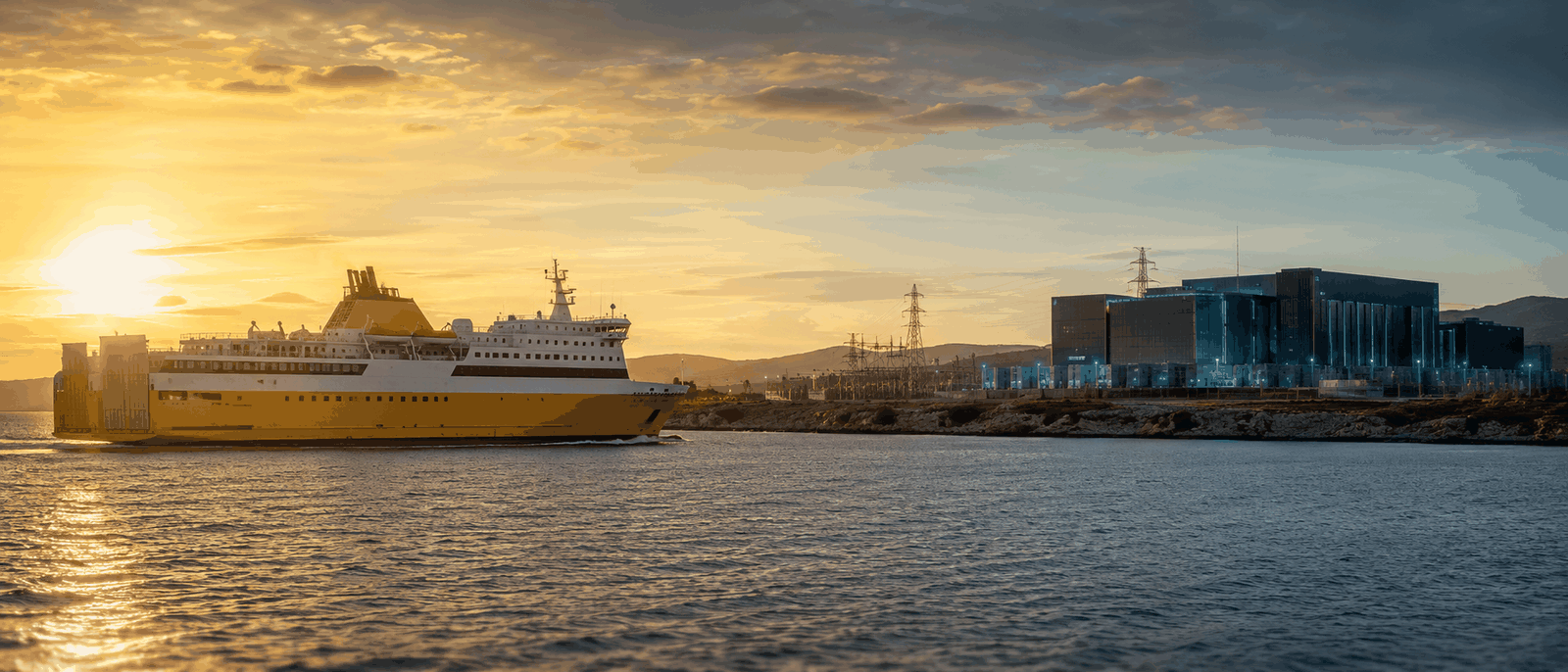
“Up to 1 GW” is not the same thing as 1 GW of data center supply available today. In a large AI campus announcement, the headline figure usually describes the ultimate development envelope: the maximum capacity the site could support after multiple phases, customer commitments, power delivery, permitting, construction and technical deployment.
On 5 September 2026, TCS announced that HyperVault had secured 264 acres in Hyderabad for an AI data center campus of up to 1 GW. TCS said the project would be developed in phases in line with customer demand and technology requirements, and that HyperVault and its partners could invest up to INR 700 billion to build and manage the infrastructure.
The announcement is significant. But for investors, developers, operators and end users, the useful question is not simply whether the campus is “1 GW”.
It is: what part of that 1 GW is actually deliverable, when, under which power and development conditions, and with what evidence?
The Headline Capacity Is the End State, Not the Starting Point
Large campus announcements often combine several layers of capacity into one number.
The first is the ultimate campus ambition: what the full landholding, utility strategy and masterplan could potentially accommodate over time.
The second is the committed development phase: the part for which land, customer demand, design, power, procurement or investment has moved materially beyond a long-term concept.
The third is the usable first-phase capacity: the megawatts that can realistically become operational within a defined delivery programme.
HyperVault itself provides a useful example. Earlier in 2026, TCS disclosed a multi-year partnership with OpenAI involving an initial 100 MW of AI infrastructure in India, with an option to scale towards 1 GW. The September Hyderabad announcement again describes a phased path to a much larger ultimate capacity.
That is the right way to read a gigawatt campus: as a sequence, not a single delivery event.
Why “Up to” Matters
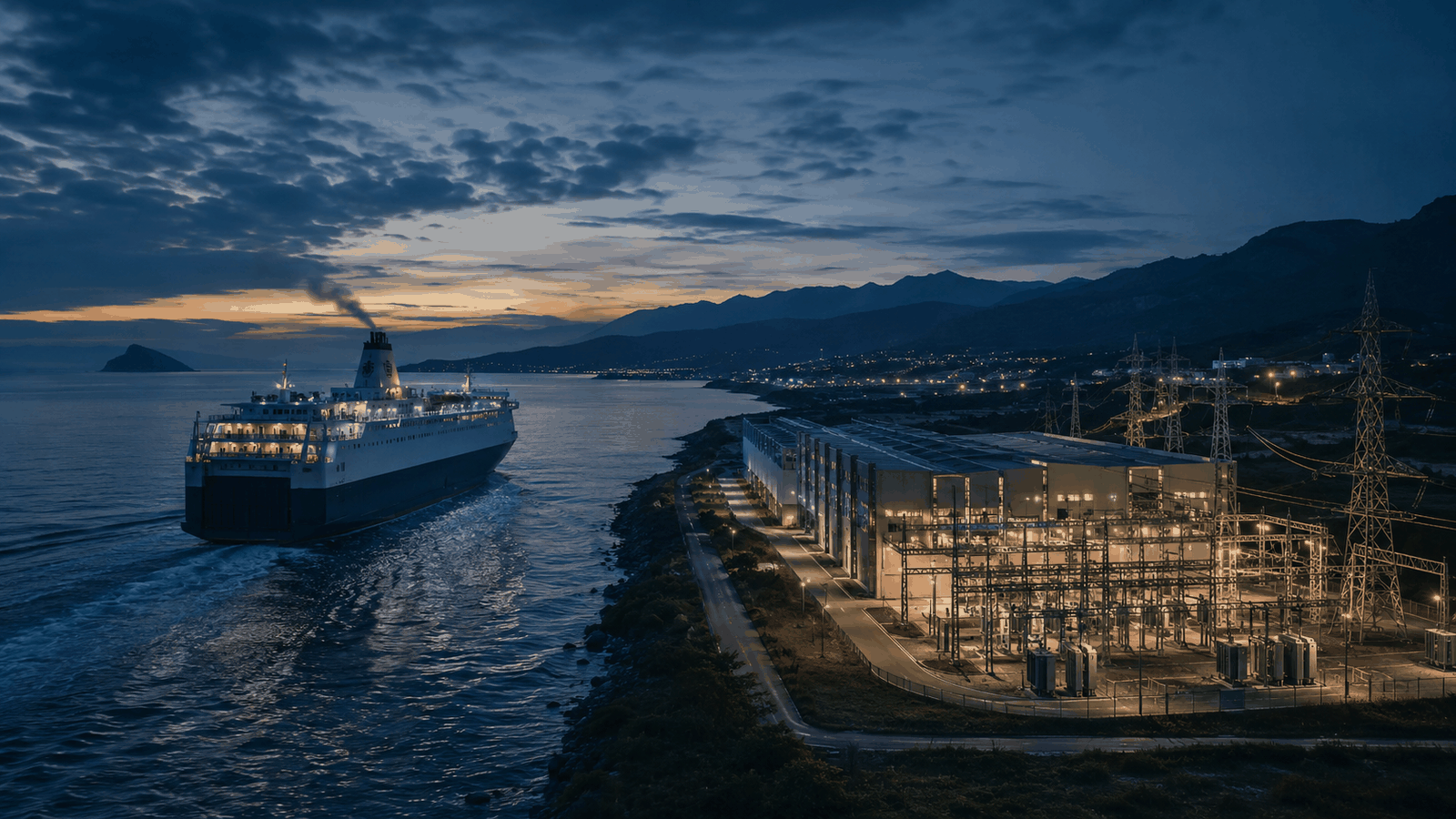
The phrase “up to” is useful disclosure. It tells the market that the announced figure is a maximum development potential rather than a statement that every megawatt is already financed, powered, contracted or under construction.
The problem starts when downstream market analysis removes that qualification.
A database can easily transform “a campus of up to 1 GW, developed in phases” into “1,000 MW of new supply”. Once aggregated across dozens of announcements, this creates a misleading picture of market capacity.
For PowerlandMap’s methodology, the correct treatment is to preserve the original capacity definition and separate reported facts from analytical estimates. A maximum campus envelope is relevant to long-term potential, but it should not automatically be added to operating, under-construction or near-term attributable IT capacity.
Five Questions Behind Any Gigawatt Announcement
A practical diligence process should reduce the headline number into a small set of decision questions.
- What is the first deliverable phase? Identify the initial MW block, target service date and the evidence supporting it.
- What power is actually secured? Distinguish grid applications, offers, executed agreements, onsite generation and ultimate utility capacity.
- What has been committed commercially? Separate customer agreements, reserved capacity and unallocated future expansion.
- What is funded or approved today? Distinguish a maximum investment envelope from committed expenditure by phase.
- What must happen before the next phase? Customer demand, permitting, substations, transmission reinforcement, cooling and procurement can all be gating items.
This is why PowerlandMap’s product separates supply, demand, matching and market signals instead of relying on a single capacity total.
Power Is the Critical Conversion Layer
Land creates optionality. Power converts optionality into infrastructure.
A 264-acre site can support a very large campus concept, but the development value depends on the sequence in which electrical capacity can be delivered and converted into usable IT load.
For AI infrastructure, this conversion is increasingly demanding. HyperVault describes its platform as purpose-built for high-density GPU workloads, direct-to-chip liquid cooling and large power blocks. Its AI infrastructure proposition also describes more than 1 GW of planned capacity across key Indian locations, developed in phases.
The important data point is therefore not only the final capacity. It is the power-and-delivery curve between the first usable block and the ultimate campus.
CAPEX Needs the Same Discipline
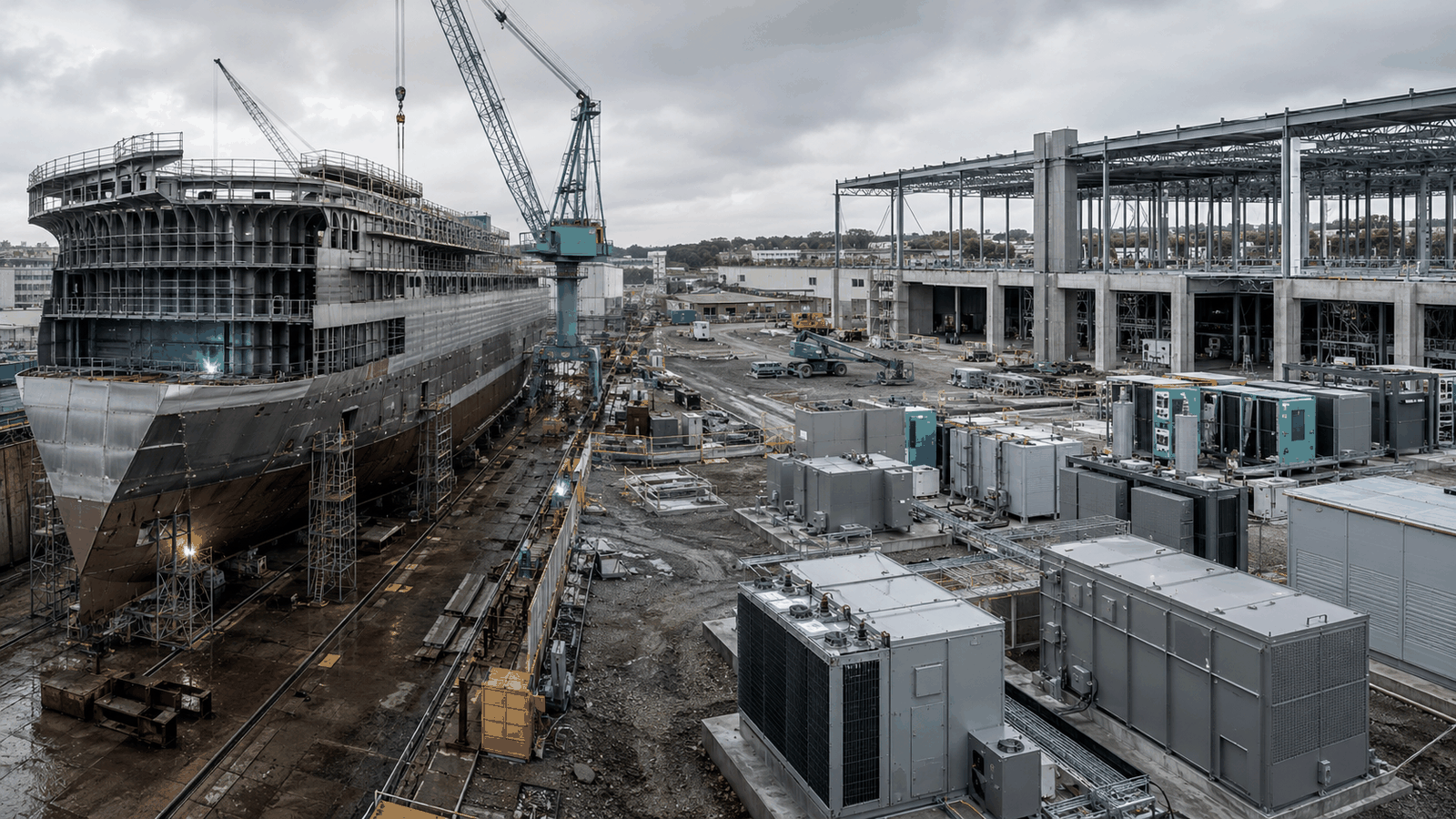
TCS stated that HyperVault and its partners are expected to invest up to INR 700 billion to build and manage the Hyderabad infrastructure. Reuters reported the figure at approximately $7.4 billion using the exchange rate at the time of the announcement.
That is a meaningful indicator of scale. It is not automatically a valid CAPEX-per-MW benchmark.
A robust unit-cost calculation requires a matching numerator and denominator. The investment figure would need to be reconciled against the actual scope included: land, buildings, electrical infrastructure, cooling, network, IT equipment, financing, operating setup and the phases covered. The denominator would also need to distinguish electrical capacity from IT capacity and ultimate campus capacity from the capacity actually funded.
Without that alignment, dividing the headline investment by 1,000 MW creates a precise-looking number with uncertain economic meaning.
PowerlandMap therefore separates source facts from unsupported unit-cost inference and keeps reported capacity distinct from modeled capacity.
A Better Supply Classification
For market analysis, large-campus capacity is more useful when split into four buckets.
Operating means capacity is in service.
Under construction means physical delivery is materially underway with a credible power and construction pathway.
Committed development means the project has progressed through land, power, customer, financing, permitting or other material evidence, but capacity is not yet operating.
Ultimate potential means the long-term campus envelope or expansion option disclosed by the developer.
A single project can occupy several buckets at the same time. That is not double counting if each layer is labelled correctly. It becomes double counting only when the same megawatts are aggregated into multiple totals without preserving their phase relationship.
This distinction is central when comparing markets across PowerlandMap’s coverage.
What to Watch Next
For HyperVault Hyderabad, the next material signals will not be another repetition of the 1 GW headline.
The useful updates will be evidence of conversion: first-phase capacity, utility and power milestones, customer commitments, permitting progress, construction mobilisation, long-lead equipment procurement and a credible target for first service.
The September announcement already provides strong foundations: a defined 264-acre site, a named developer, government support, a phased development model and an explicit AI infrastructure strategy.
What remains to be observed publicly is how those elements translate into the first operating blocks.
For a market-intelligence platform, this is exactly where a static announcement becomes a live development record.
My View: The First 100 MW Often Matters More Than the Last 900 MW
My view is that gigawatt announcements are useful, but the market often overweights the ultimate number and underweights the first executable phase.
For an end user, the first 50 MW or 100 MW that can be delivered on the required date is usually more valuable than 900 MW of expansion potential dependent on future power, customers and capital.
For an investor, the first phase also reveals whether the development platform can convert land, power, permits, design and commercial demand into an operating asset. Once that pathway is proven, the expansion option can become extremely valuable.
The right way to read “up to 1 GW” is therefore neither sceptical nor promotional. It is to treat the figure as strategic optionality, then measure how quickly that optionality is converted into evidenced, financeable and usable capacity.
The Bottom Line
A 1 GW AI campus announcement should not be entered into a market model as 1 GW of immediately available supply.
It should be decomposed into the ultimate development envelope, committed phases, power milestones, customer-backed capacity and the first realistic service date.
HyperVault’s Hyderabad announcement is a strong example: the project is genuinely large, backed by a major corporate platform and designed for high-density AI infrastructure, while TCS is also clear that development will occur in phases according to customer demand and technology requirements.
PowerlandMap was originally developed inside The Blob Company to structure this type of fragmented market information. It is now a standalone SaaS platform designed to help investors, developers, operators and end users compare supply, demand, matching and development signals on a source-traceable basis.
To test the platform on one market or one live infrastructure decision, open the demo, review the subscription options, or request access.
Sources
Tata Consultancy Services — Q4 FY2026 press release and HyperVault/OpenAI infrastructure partnership
Tata Consultancy Services — HyperVault AI-ready data center infrastructure
Reuters — TCS unit to invest up to $7.4 billion in AI data center campus, 5 September 2026
The data behind the analysis
Follow AI Infrastructure with sourced, dated evidence
Qualified supply, anonymised demand and evidence-based matching sit behind each read — with the source, confidence level and verification date on every record
Related analysis
When an Energy Company Becomes a Compute Operator
Energy ownership can shorten the route to AI compute, but only site-level evidence shows whether power becomes an accepted service.
AI Rack Density Is Not a Facility Power Plan
A 120 kW AI rack is only the start of the electrical and cooling calculation. Site decisions require a full-load, system-level power envelope.
Sovereign AI Infrastructure Starts With Power
Sovereign AI is not only about models and data. Power-ready sites, executable capacity and delivery evidence increasingly determine where controlled compute can actually scale.