
Power Procurement Is Now a Data Center Site Strategy
Long-term PPAs, grid investment and hourly matching rules are turning power procurement into a core data-centre site-selection and bankability discipline.
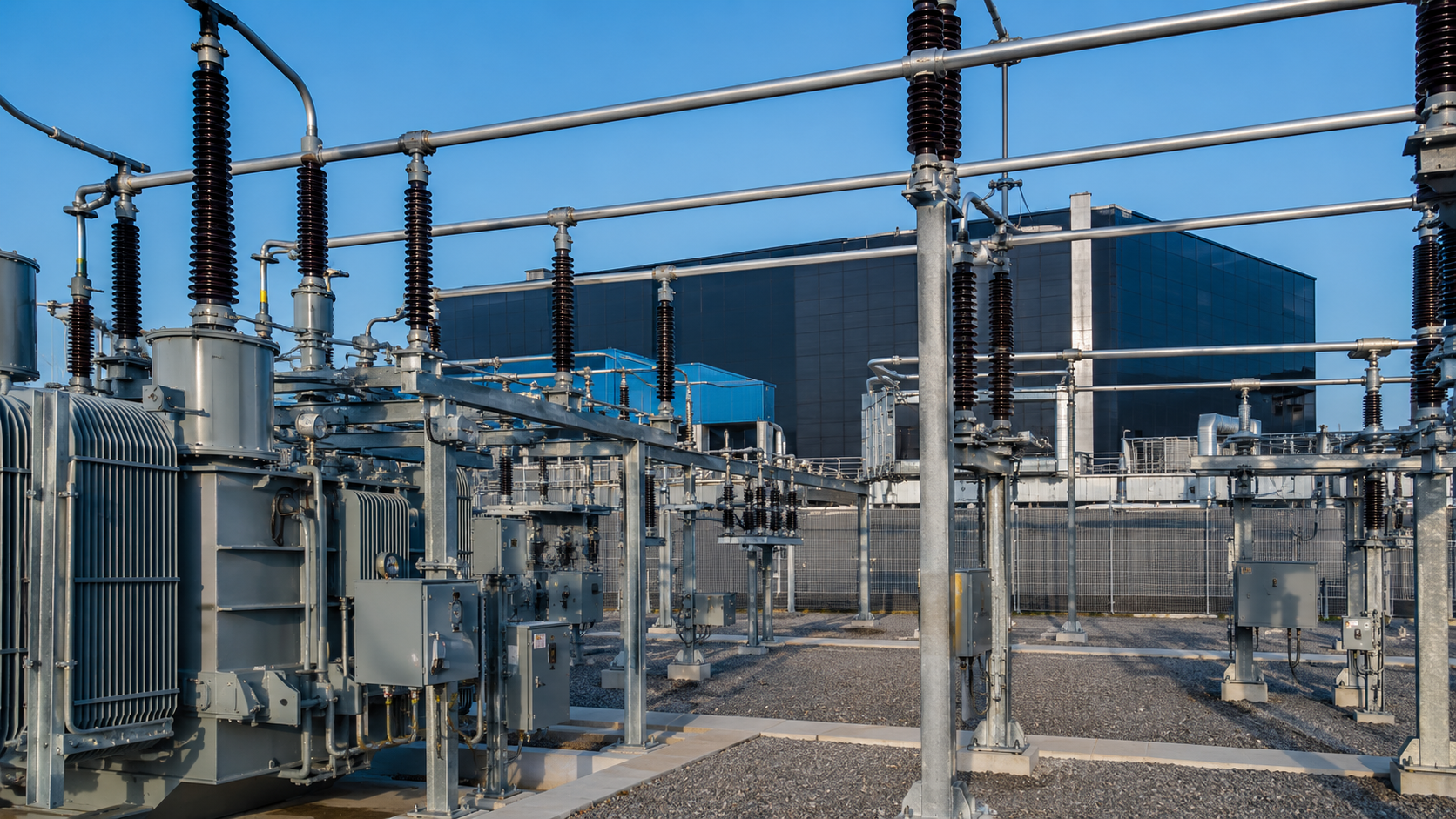
Power procurement has become part of site selection
The traditional data-centre site-selection sequence was relatively linear: secure land, test planning, request a grid connection, estimate construction cost and then negotiate the energy contract. That order is becoming less reliable for large AI and hyperscale campuses.
On 9 September 2026, Google announced at least €13 billion of AI-infrastructure investment in Finland for 2027 and 2028. The programme includes three new data centres in northern Finland, further investment at Hamina, grid improvements, clean-energy projects and battery storage. Fortum also disclosed a 22-year agreement under which Google would buy up to 50% of the output of the Loviisa nuclear plant from 2030.
The important point is not simply that a hyperscaler signed a power-purchase agreement. It is that power supply, generation economics, grid reinforcement and data-centre delivery were presented as one investment system.
That changes how investors, developers and end users should qualify sites. A credible location is no longer just a parcel with a grid application. It is a coordinated package of land, connection milestones, generation or procurement, planning, delivery capacity and long-term operating economics.
What the Finland announcement actually proves
The public facts are substantial but should still be separated carefully.
Google has committed a national investment envelope of at least €13 billion. Reuters reported three new northern data centres, while Finnish public broadcaster Yle identified Kajaani, Muhos and Vaala and reported further investment at the existing Hamina campus. Yle also described visible site works in Kajaani and Muhos and noted that zoning decisions in those two municipalities face appeals.
Fortum's agreement concerns up to half of Loviisa's output for 22 years. It provides economic visibility for life-extension and upgrade work through 2050. Google and Fortum also intend to explore additional nuclear and renewable projects.
What the announcement does not prove is equally important. It does not allocate the €13 billion among the four locations. It does not disclose site-level IT load, electrical load, commissioning dates or the proportion of spending dedicated to servers, buildings, grid infrastructure and energy assets.
PowerlandMap therefore records the three northern locations without inventing MW or dividing the portfolio capex mechanically. This is the same evidence discipline described in our methodology: national commitments, site capacities and deliverable IT load are different data objects.
Long-term power can improve project bankability
A long-duration offtake agreement can create value on both sides of an infrastructure transaction.
For a generator, a creditworthy buyer can support asset upgrades, life extension or new capacity. For the data-centre operator, an agreement can improve cost visibility and strengthen the credibility of a large development programme. For the grid, flexible assets such as batteries may help manage the timing and variability of demand, although their commercial and technical role must be verified rather than assumed.
This does not mean every project needs a nuclear PPA. The transferable lesson is that the energy strategy should be tested at the same time as land and grid readiness.
A project may combine several layers:
- regulated grid supply and connection charges.
- long-term physical or financial PPAs.
- on-site or nearby generation.
- batteries and demand-response capability.
- taxes, levies and guarantees of origin.
- backup generation and resilience equipment.
Those layers have different prices, risks and delivery dates. They should not be collapsed into a single “power cost” assumption. Our electrical-price intelligence is designed around that distinction between market prices and the cost actually delivered to a relevant consumer category.
Regulation is making hourly delivery more important
Spain offers a second, different signal. On 10 September 2026, El País reported that the government was considering adjustments to a draft royal decree on data-centre electricity consumption after extensive consultation feedback. The reported draft included an obligation to match 80% of additional consumption with renewable generation on an hourly basis.
The measure is not adopted law, and its final form may change. It should therefore be treated as a regulatory scenario, not as a current compliance fact.
Even so, the direction matters. Annual renewable procurement is not the same as hourly matching. A project can buy enough renewable certificates over a year while still consuming during hours when local low-carbon supply is scarce. Hourly requirements make location, generation profile, storage and contract design more closely connected.
For market entry, this creates a new diligence question: can the proposed power strategy work at the hours when the data centre will actually run, and at a cost compatible with the business model?
This is why a grid connection alone is no longer the whole power strategy. Regulation, procurement and delivery structure increasingly influence whether a nominally connected site is commercially executable.
A practical diligence framework
Investors and operators can reduce false positives by testing power procurement through five gates.
1. Connection status
Identify whether the project holds an application, a study, a reservation, a signed connection agreement or energised capacity. Record voltage, requested load, delivery conditions and milestone dates. A nearby substation is evidence of proximity, not availability.
2. Capacity basis
Separate campus electrical capacity from critical IT load. Record whether a figure is requested, reserved, contracted, deliverable or operational. This distinction is central to market-intelligence analysis and prevents aggregate announcements from becoming artificial supply.
3. Energy contract
Test tenor, volume, pricing structure, delivery point, additionality, curtailment, balancing obligations and credit support. A headline PPA volume is not necessarily the same as firm, round-the-clock delivered electricity.
4. Regulatory fit
Model current rules and plausible regulatory scenarios separately. Avoid treating consultations as adopted obligations. Where hourly matching, network-cost allocation or local-generation requirements are proposed, quantify the sensitivity before committing to land or design.
5. Delivery coordination
Align power dates with permitting, construction, substations, transformers, switchgear and tenant requirements. A site can be commercially late even if its ultimate grid capacity is attractive. The checklist in what makes a data-centre site power-ready provides a useful starting point.
The implication for supply intelligence
Large announcements often enter market databases as one headline number. That is convenient and frequently wrong.
The Finland investment is a portfolio commitment across several locations and infrastructure categories. Nvidia's separate Australian announcement of up to 2 GW of AI-related capacity is also an ecosystem aggregate across multiple partners, not a verified single-site IT figure. In both cases, users need to know where the capacity sits, what stage it has reached and which constraints remain.
The correct workflow is to preserve the announcement, create only identifiable project records and wait for site-level evidence before assigning capacity. It is also important to distinguish planned supply from capacity that can realistically serve a customer. The same principle explains why reserved matters in data-centre supply.
PowerlandMap view
PowerlandMap opinion: long-term power procurement is becoming a development asset, not a late-stage operating input.
A strong energy structure can improve project credibility, reduce exposure to future price or regulatory shocks and help coordinate investment across generation, grids and data centres. But it only adds value when the underlying rights, dates, capacity basis and commercial terms are evidenced.
For developers, the priority is to integrate energy procurement before design and permitting become difficult to change. For investors, the priority is to diligence the whole delivery chain rather than reward a headline MW number. For end users, the priority is to compare genuinely executable capacity across markets.
PowerlandMap links those questions across supply, power, OPEX and development readiness. Teams evaluating a market, portfolio or capacity requirement can request access for a focused review.
Sources
Yle — Google confirms data centres in Kajaani, Muhos and Vaala, 9 September 2026
*Matthieu Gallego — Founder, PowerlandMap*
The data behind the analysis
Follow Power & Grid with sourced, dated evidence
Each analysis draws on qualified supply records, anonymised demand signals and evidence-based matching. The underlying records retain their sources, confidence levels and verification dates.
Related analysis
When Shoulder Season Disappears
Year-round data-center demand is eroding the grid’s traditional maintenance window. A practical diligence framework for delivery, resilience and expansion risk.
From Grid MW to Live IT Capacity
A six-level evidence framework for separating grid offers, electrical envelopes, designed IT capacity, commissioned supply and live data center load.
A Power Deal Is Not IT Capacity
A practical framework for separating generation, contracted supply, grid connection, facility electrical capacity and critical IT load.